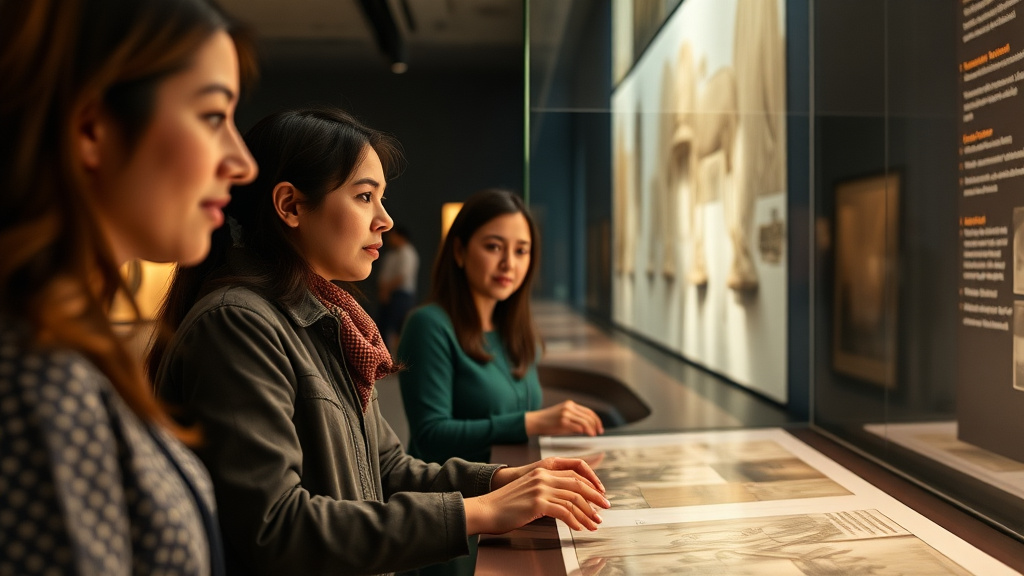
Museums are becoming dynamic spaces where community histories unfold. Today’s innovative curators are rethinking exhibitions that transcend traditional displays, creating engaging encounters that showcase varied perspectives and preserve heritage for future generations. By combining advanced digital tools with thoughtful storytelling, these forward-thinking experts are challenging traditional viewpoints and inviting audiences to engage deeply with their own heritage. Learn how groundbreaking curatorial approaches are redefining the museum landscape and reconceiving what it means to honor our shared human story.
Modern Exhibition Strategies for Cultural Narratives
Modern museum curators are reshaping how historical accounts are communicated to people around the world. By moving beyond fixed installations, they create interactive environments that invite guests to discover their own sense of belonging and ties to heritage. These specialists utilize sensory-rich encounters, blending visual art, sound, and hands-on features to deepen affective resonance. Today’s museum shows now showcase multiple voices often overlooked in historical collections, guaranteeing excluded populations witness their stories truthfully presented and valued.
Technology operates as a vital element in revolutionizing curatorial practice and patron interaction. Immersive digital environments, mixed reality technology, and 3D reconstructions permit audiences to engage with significant historical periods and cultural frameworks with unprecedented immediacy. Curators leverage these tools to overcome spatial and time barriers, rendering heritage available to global audiences. This technology adoption doesn’t eliminate human narrative; rather, it enhances curatorial vision, empowering curators to convey sophisticated accounts with resonance and comprehensibility that traditional methods alone are unable to provide.
Collaborative curation represents another innovative methodology redefining museum exhibitions today. Curators regularly work together with community members, cultural practitioners, and descendant groups to ensure genuine portrayal of their heritage. This inclusive methodology recognizes that communities themselves are the foremost authorities on their heritage and cultural importance. By centering community voices in curatorial planning, museums evolve from traditional institutions into spaces for dialogue where multiple stories interact and deepen collective understanding.
Cross-disciplinary research approaches strengthen modern curatorial practice markedly. Curators now partner with anthropologists, historians, scientists, and creative professionals to analyze museum artifacts from multiple analytical perspectives. This comprehensive approach reveals obscured links between objects, historical events, and cultural practices. By bringing together multiple disciplines, exhibitions become increasingly sophisticated and intellectually robust, offering visitors deeper insights of how cultural identity forms through multifaceted interactions of history, geography, economic factors, and creative expression.
Thematic flexibility allows curators to examine contemporary issues through historical and cultural lenses. Modern exhibitions explore how heritage influences present-day identity challenges, social movements, and social cohesion. Rather than portraying culture as unchanging or historical, innovative curators reveal its dynamic, evolving nature. This approach connects strongly with audiences searching for meaning and connection, transforming museums into spaces where history and contemporary life dialogue meaningfully.
Accessibility and inclusivity have become fundamental curatorial principles in groundbreaking exhibitions. Museums now design exhibitions taking into account diverse learning styles, physical abilities, and different cultural perspectives. Multilingual interpretation, sensory-friendly hours, and varied engagement levels ensure broader audiences engage with exhibitions. This dedication to access demonstrates contemporary museum thinking that cultural heritage is for all people and should be accessed without barriers or exclusion.
Interactive Exhibitions and Public Participation
Modern museums are transforming visitor journeys through engaging displays that transform passive observation into direct engagement. These interactive spaces prompt audiences to explore cultural accounts firsthand, creating deeper connections with cultural identity and heritage. By weaving in interactive elements, technology platforms, and engaging atmospheres, curators develop spaces where visitors serve as collaborative interpreters. Community engagement initiatives reach past gallery walls, cementing museums as important cultural institutions that reflect and celebrate the varied perspectives of their communities and residents.
User-Centered Design Methods
Curators are adopting community-centered design practices that center community involvement in exhibition creation. This collaborative approach ensures that portrayals of culture accurately represent real-world experiences and viewpoints of the communities on display. By facilitating in-depth conversations, discussion panels, and participatory creation events, museums establish accountability and trust. These engagement practices reshape exhibitions as spaces for conversation, where underrepresented perspectives receive visibility and audiences experience accounts created by community members with lived experience.
The incorporation of public perspectives across the exhibition planning generates exhibitions that connect more effectively with different communities. Museums implementing audience participation strategies report greater audience involvement, enhanced educational impact, and stronger community relationships. This partnership model challenges traditional hierarchies where curators exercised exclusive authority over narrative formation. Instead, collections serve as collaborative environments where multiple perspectives coexist, enriching the visitor experience and building more welcoming diverse cultural stories that celebrate real community narratives.
- Convene community advisory councils directing display topics
- Conduct joint working sessions with cultural stakeholders
- Incorporate audience input within educational resources
- Highlight local participants in the role of exhibition contributors
- Establish continuous conversation between the institution and community cultural institutions
Successful collaborative exhibitions show significant outcomes on community development and heritage conservation. Museums adopting these approaches see increased attendance from historically excluded populations and stronger advocacy for cultural institutions. The participatory model proves particularly effective for exhibitions exploring marginalized identities and cultural legacy, as public participation ensures accuracy and contemporary significance. These collaborative exhibitions ultimately advance overarching organizational aims of equity, accessibility, and community accountability while generating lasting impressions that deepen visitors’ understanding of cultural identity.
Protecting Heritage Through Technological Advancement
Digital technology has reshaped how museums maintain and showcase cultural heritage. Advanced scanning techniques capture intricate details of artifacts, creating comprehensive virtual collections open to researchers and the public worldwide. 3D virtual simulations bring audiences into historical moments, allowing them to discover ancient civilizations and cultural sites from their homes. These modern technologies ensure that fragile heritage items are safeguarded while remaining available for learning and instruction and scholarly research. Museums now leverage artificial intelligence to index materials, identify patterns in cultural artifacts, and strengthen protective measures significantly.
Interactive digital spaces provide widespread access to cultural treasures formerly accessible solely to museum visitors. Web-based exhibitions showcasing high-resolution images, 3D models, and rich media reach global audiences, eliminating geographical barriers to cultural participation. Museums collaborate with communities to create digital repositories that celebrate local histories and traditions. These programs give agency to cultural groups to control their narratives and share heritage on their own terms. Social media integration amplifies museum reach, cultivating dynamic digital communities where people discuss cultural identity and heritage preservation consistently.
Augmented reality applications enhance physical museum visits, overlaying digital information onto displayed artifacts. Visitors scan objects with smartphones to retrieve detailed histories, artist perspectives, and contextual cultural information instantly. Gamification elements drive deeper exploration, transforming passive observation into engaging educational encounters. These combined methods appeal to diverse audiences, particularly younger generations accustomed to digital interaction. Museums report greater engagement levels and longer visit durations when augmented reality features enhance traditional exhibitions effectively.
Artificial intelligence tools aid curators in analyzing vast collections, identifying underrepresented narratives, and recommending thematic connections. Machine learning algorithms detect patterns in cultural artifacts, showing relationships between different traditional practices. Predictive analytics help museums predict visitor interests and adapt exhibition experiences accordingly. These technologies enable curators to create more representative exhibitions reflecting varied viewpoints and underrepresented histories. Digital innovation enables museums to question historical narratives and offer multifaceted interpretations of cultural identity completely.
Crowdsourcing initiatives invite communities to submit firsthand accounts and materials to online archives. Museums work alongside cultural groups to digitize community-owned artifacts, building shared repositories that honor community heritage. Web-based tools enable visitors to contribute images, records, and stories related to exhibitions. This community-engaged model transforms museums into public forums where cultural conservation becomes a shared responsibility. Digital tools facilitate cross-generational conversation, linking elders’ knowledge with youth seeking cultural connections and identity understanding.
Looking ahead, museums continue to advance digital preservation technologies to ensure cultural heritage survives environmental challenges and societal changes. Blockchain technology offers secure, decentralized archiving of cultural records, safeguarding intellectual property rights of indigenous communities. Virtual museum experiences will develop greater complexity, offering personalized journeys through cultural narratives. Museums will integrate emerging technologies while upholding curatorial integrity and community collaboration. Digital innovation ultimately fulfills museums’ fundamental mission: preserving humanity’s diverse heritage and facilitating meaningful cultural engagement across generations and continents.
